Brick Blast - Brick Breaker
EasybrainPuzzle
4.8745.00 Reviews
- Version
- 1.9.0
- Installs
- 5.00M
- Age Rating
- Teen
Screenshots
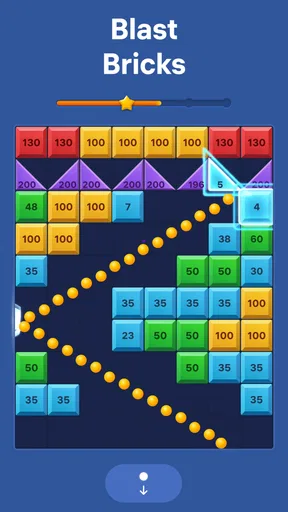
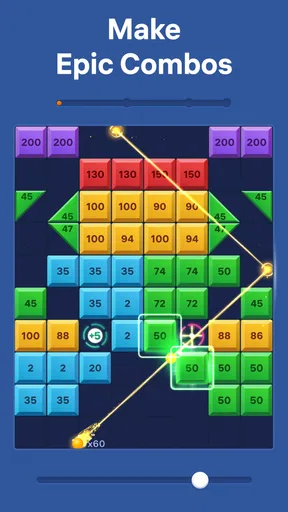
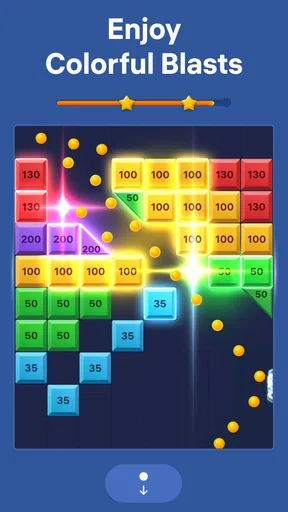
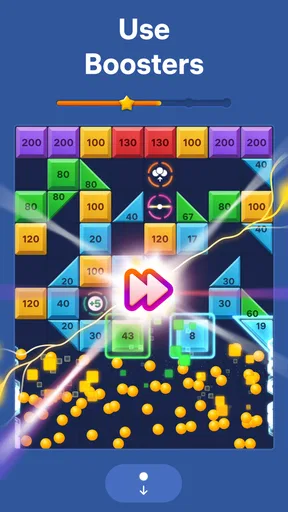
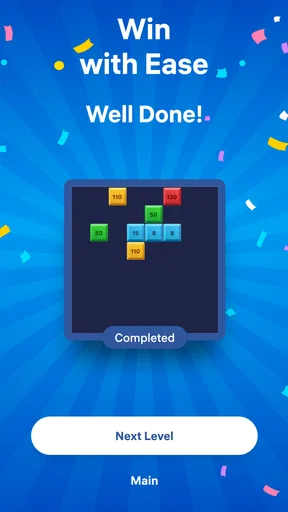
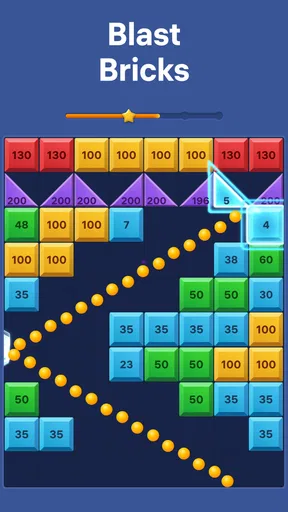
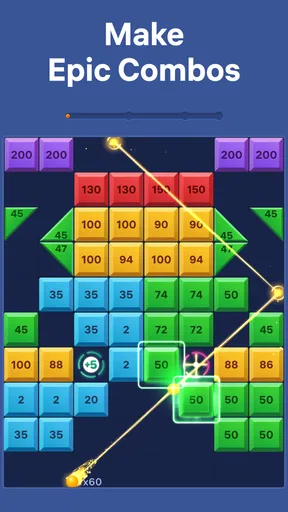
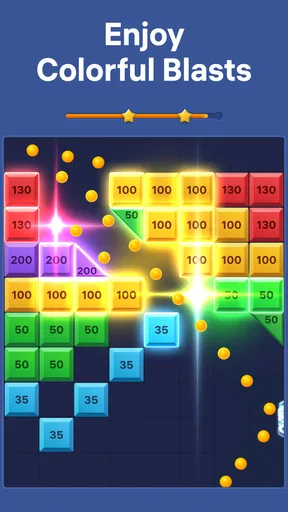
Our Review of Brick Blast - Brick Breaker
 Analysis by Appyee
I enjoy puzzle games that explain themselves in seconds and still give me a reason to play one more round. Brick Blast - Brick Breaker fits that mood well: it is a free puzzle game from Easybrain built around aiming a ball, breaking brick formations, and clearing the board. The idea is familiar, but the appeal comes from the small decisions between shots. I am not just tapping quickly; I am looking for an angle that lets one ball travel through several targets before returning.
My overall view is positive, with one important qualification. This is best as a short-session game for people who like simple rules and gradual problem solving, not as a deep puzzle experience with a large story or complicated system to master. It is easy to start during a spare minute, yet satisfying enough to keep me thinking about the next move. The free entry point makes it approachable, although the presence of in-app purchases means I would still pay attention to the way I play and what I am tempted to buy.
Why the simple shooting loop works
The central action is immediately understandable. Bricks occupy the board, and I choose a direction before sending the ball into them. Each collision changes the path, so the best shot is often not aimed at the nearest brick. I look for openings, side angles, and routes that can keep the ball moving through a cluster. That gives the game more thought than its basic presentation might suggest.
What makes the loop effective is the balance between planning and release. Before shooting, I can study the arrangement and imagine how the ball will bounce. After the shot begins, I have to accept the result and see whether my prediction was good enough. That short cycle creates a pleasant rhythm: inspect, aim, launch, observe, and adjust. It is a comfortable structure for a puzzle game because each attempt feels understandable even when it does not go well.
The board-clearing objective also keeps the focus clean. There is no need to learn a long set of rules before enjoying the game. I can pick it up without preparation, play until I want to stop, and return later without needing to remember a complicated plot or a large collection of controls. For a phone game, that clarity is a real strength rather than a lack of ambition.
I found the most rewarding moments came from setting up a shot that did more than solve the immediate problem. A direct hit may remove one obstacle, but a carefully chosen angle can create a chain of useful collisions. That encourages me to think about the ball’s full route instead of judging a shot by its first impact. It is a small but meaningful distinction, and it is what keeps the experience from feeling like random tapping.
Small decisions matter more than fast fingers
This is not a game I would recommend playing as quickly as possible. The useful habit is to pause before every launch and ask which brick will give the ball the most valuable next angle. A shot aimed at a low target may be less helpful than one that sends the ball upward through a denser group. I also try to avoid leaving the board in a shape where the next turn has very few useful routes.
One practical technique is to treat the first bounce as the beginning of the plan, not the end. I check where the ball could go after touching a wall or brick, then compare that route with a more obvious direct shot. This makes the game feel more deliberate and helps reduce wasted attempts. It is especially useful when the board looks crowded and several targets appear equally attractive.
Another useful approach is to value future access over immediate progress. Clearing one brick can be satisfying, but opening a lane toward a larger group may be the better decision. I do not always choose the move that produces the biggest visible result right away. Sometimes I choose the one that leaves more options for the following turn. That forward-looking habit is one of the more interesting pieces of puzzle thinking here.
The game is also a good fit for players who enjoy low-pressure repetition. I can make a mistake, understand why the angle failed, and try to improve the next attempt without needing to master a complicated control scheme. The learning is gradual and visual. I see the consequence of a poor line almost immediately, which makes adjustment feel natural.
Where it fits into an ordinary day
I can imagine using this during a short wait at a bus stop, between tasks, or while taking a break from a longer activity. A round does not require the kind of uninterrupted attention that a story-driven game demands. I can focus on the board, make a shot, and decide whether I want to continue. That makes it more convenient than many traditional puzzle games that expect a longer sitting.
It also works as a mental reset. When I have been switching between messages and work, the simple act of searching for a good angle gives my attention one clear target. The game does not ask me to remember character abilities, follow dialogue, or manage a large inventory. I just solve the arrangement in front of me. For me, that simplicity is useful when I want engagement without another complex commitment.
Still, I would not call it completely passive. If I rush because I am distracted, I lose the part that makes the game interesting. The best short sessions are the ones where I give each shot a moment of thought. Someone looking for a game to play with one hand while barely watching the screen may find the experience less rewarding than someone willing to pay attention to the angles.
What the package tells me about the experience
Easybrain presents this as a puzzle title rather than a competitive action game, and that description feels accurate. The emphasis is on board reading and shot selection, not on reflexes or a complex control layout. The current release is version 1.9.0, and the game runs on Android 8.0 or later. That makes it a broadly accessible option for people using older compatible phones as well as newer devices.
The game is free to install, which lowers the risk of trying it. It has a Teen content rating, so I would not automatically treat it as a children’s game even though the rules are easy to understand. Families should check whether the tone and purchase setup suit the particular player. In-app purchases are listed at $14.99 per item, a detail worth keeping in mind before handing the phone to someone who may be inclined to buy optional content or advantages.
Its audience size also suggests that the basic format has found a strong response. Brick Blast has a 4.8 average from around 85 thousand ratings and has passed 5 million installs. I do not treat popularity as proof that a game will suit me, but these figures make sense when I consider how quickly the core loop can be understood. The game gives a new player a clear first objective without burying that objective under menus or explanations.
The store description calls attention to shooting balls, blasting bricks, and clearing the board, but my recommendation is based on how those pieces work together rather than on that summary alone. The useful part is the relationship between a chosen angle and the later path of the ball. That is where the puzzle identity lives, and it is also where the game either holds my attention or starts to feel repetitive.
The strongest reasons to keep playing
The first strength is immediacy. I do not need a tutorial-heavy introduction to understand what I am doing. That helps the game serve its main purpose as a quick phone puzzle. A friend can install it, start a session, and know the basic goal almost at once.
The second strength is the physical clarity of each move. The ball’s route provides visible feedback, so I can connect my decision with the result. If I choose a poor angle, the problem is usually easy to identify. That makes improvement satisfying because I am not guessing whether a hidden rule caused the failure.
The third strength is the way simple rules leave room for personal style. One player may prefer safe shots that steadily reduce the board, while another may search for ambitious routes through several bricks. I tend to combine both approaches, taking a reliable option when the board is dangerous and attempting a more creative line when there is room to recover.
A less obvious benefit is that the game can sharpen visual patience. It rewards me for examining the entire arrangement rather than reacting to the first available target. That is a modest form of strategic thinking, but it gives the title more staying power than a purely automatic brick-breaking game would have.
I also appreciate that the concept does not depend on a large amount of background knowledge. Someone who has never played a particular puzzle series can still understand the challenge. Compared with match-three games, the focus here is less about spotting color combinations and more about predicting movement. Compared with classic brick breakers, it feels more turn-based in spirit because the important decision happens before the ball is launched rather than during constant paddle control.
The meaningful limitation: familiarity can catch up
The same simplicity that makes the game welcoming can eventually become its main weakness. If I am looking for a puzzle game with a story, character progression, elaborate rule changes, or a wide range of distinct modes, this may feel too narrow. The core pleasure comes from aiming and clearing, so anyone who needs frequent mechanical surprises may lose interest once the basic pattern becomes familiar.
There is also a difference between short-term satisfaction and long-term depth. The game is excellent at filling a small gap in my day, but I would not choose it over a more substantial strategy title when I want a long, absorbing session. Its value depends on enjoying repeated board analysis. Players who dislike retrying similar situations or who prefer puzzles with one carefully authored solution may find the ball-and-brick format less compelling.
The purchase structure is another point of friction for me. The game is free, but individual in-app purchases can reach $14.99. That does not automatically make the experience unfair, yet it means I would approach the optional spending carefully. I prefer to decide in advance whether I am willing to pay rather than make a purchase because I am impatient with a difficult board or caught up in a long session.
The Teen rating reinforces that this is not something I would recommend without thought to very young players. The controls may be simple, but age suitability is not determined by controls alone. Parents should consider the rating and keep purchase expectations clear before allowing regular play.
Who should try it, and who should skip it
I would recommend this game to people who enjoy casual physics puzzles, classic brick-breaking ideas, and games that reward a few seconds of planning. It is particularly suitable for players who want something they can start quickly without committing to a campaign. It may also appeal to someone who likes testing angles and learning from visible mistakes more than chasing a complicated score system.
It is a good choice for a short break when I want more involvement than a completely idle game provides. I can use a careful shot as a small mental challenge, then stop without feeling that I have abandoned an unfinished story. That makes it more flexible than many adventure or role-playing games, which often work best when I can give them a longer block of attention.
I would point a different way for players who want competitive multiplayer, rich narrative, or a puzzle system that changes dramatically from stage to stage. Match-three games may be better for someone who enjoys pattern recognition through colors and combinations. Traditional arcade brick breakers may suit someone who wants continuous paddle control and reflex-based action. A dedicated logic puzzle may be preferable for someone who wants tightly defined solutions rather than bouncing trajectories.
I would also skip it if I know I am vulnerable to spending when a free game becomes demanding. The purchase price attached to individual items is high enough that I would want a clear personal limit. The game is easiest to recommend when the player is comfortable treating purchases as optional and enjoying the basic loop on its own terms.
My practical approach to getting more from it
I get better results when I slow down at the start of a turn instead of trying to compensate afterward. I first identify the brick or opening that will influence the ball’s next direction, then look for a route that keeps the ball active across several targets. This simple scan often produces a better result than aiming at the most visible brick.
When two shots seem equally useful, I choose the one that leaves the board easier to read. A cluttered arrangement can make the next decision harder, while a shot that opens a clear lane gives me more confidence on the following turn. That is a small workflow change, but it helps me avoid playing only for the immediate collision.
I also recommend separating experimentation from routine play. If the board offers a risky angle with a potentially large payoff, I try it when I have room to recover. When the layout is already unfavorable, I prefer a controlled shot that improves access. Thinking in those two modes makes the game feel less random and gives each attempt a purpose.
Finally, I would set purchase boundaries before starting a long session. Because the game is free but includes items priced at $14.99 each, deciding in advance that I will play without spending, or defining a firm limit, keeps the focus on the puzzle. That is especially sensible for shared devices and younger users.
Final verdict
Brick Blast - Brick Breaker succeeds because it turns a familiar ball-and-brick idea into a compact aiming puzzle. I like that every shot invites a small prediction, and I appreciate how quickly the game becomes playable. Easybrain has chosen a format that works particularly well for short sessions, casual problem solving, and players who enjoy seeing a plan unfold through a chain of collisions.
My reservation is equally clear: the experience may not provide enough variety for someone seeking a deep or constantly evolving puzzle game. The free model also deserves a little discipline because in-app purchases can be costly on an individual-item basis. Those are not reasons to reject it, but they are important when deciding whether it belongs on your phone.
For me, this is a worthwhile download if I want a straightforward puzzle that sits between a classic arcade game and a turn-based logic challenge. I would recommend it to a friend who enjoys finding clever angles, has a few spare minutes at a time, and is comfortable ignoring optional spending. I would steer a friend toward another category if they need a story, multiplayer competition, or a much broader set of mechanics. Within its focused niche, though, it is an accessible and satisfying way to make a short break feel like a small problem worth solving.
Verdict
Strengths of Brick Blast - Brick Breaker
- Simple one-touch controls make it easy to start playing immediately.
- Short levels work well for quick breaks or casual sessions.
- Offline play lets you enjoy the game without a constant connection.
- Brick layouts offer satisfying chain reactions and combo opportunities.
- Bright visuals and clear effects make blocks easy to track.
Limitations of Brick Blast - Brick Breaker
- Difficulty can rise sharply, making some stages feel frustrating.
- Repeated brick patterns may become predictable during longer sessions.
- Power-ups can feel inconsistent depending on their position and timing.
- Ads may interrupt play or require watching videos for extra rewards.
- The game offers limited depth for players seeking a more strategic experience.
Other Releases by Easybrain
View All
Art Puzzle - Puzzle Games
Puzzle4.8

Arrow Puzzle: Tap Puzzle Games
Puzzle4.8

Blockudoku®: Block Puzzle Game
Puzzle4.6

Sudoku.com - Sudoku Puzzle
Puzzle4.7
Similar Picks in This Category
View All
Block Blast!
HungryStudio4.8

Braindom: Brain Games Test
Lahana Game Studio4.6

AMAZE!
CrazyLabs LTD4.6

Sudoku - Classic Sudoku Puzzle
Oakever Games4.7
Art Puzzle - Puzzle Games
Easybrain4.8

Amaze GO!
Oakever Games4.9
Frequently Asked Questions
What is Brick Blast - Brick Breaker, and how is the game played?
Brick Blast - Brick Breaker is a casual arcade puzzle game built around the classic brick-breaking concept. You launch a ball toward numbered or colored blocks, then try to clear as many as possible before they reach the bottom of the board. Each turn requires aiming carefully, using wall rebounds, and choosing a path that creates multiple hits. The controls are generally simple, making it suitable for short play sessions.
Is Brick Blast - Brick Breaker free to download and play?
Brick Blast - Brick Breaker can generally be downloaded and played without an upfront purchase, although the exact availability may depend on your Android or iOS region. As with many free casual games, optional advertisements, bonuses, extra lives, or in-app purchases may be included. Before downloading, check the store listing for current pricing, supported devices, advertising information, and any purchase options available inside the game.
Does Brick Blast - Brick Breaker require an internet connection?
The basic brick-breaking gameplay is typically designed to work offline, which makes Brick Blast - Brick Breaker convenient for travel, waiting rooms, or other situations without reliable connectivity. However, some features may require internet access, including advertisements, cloud-related services, leaderboards, event content, or updates. If offline play is important to you, test the main game after disabling your connection because functionality can vary between versions.
Is Brick Blast - Brick Breaker suitable for children and casual players?
Brick Blast - Brick Breaker is usually easy for beginners because it relies on straightforward aiming and tapping rather than complicated controls. Its colorful presentation and short levels can appeal to children, families, and casual players. Parents should still review the current age rating and privacy information, especially if children use the device, because free games may display advertising or offer optional purchases that could require supervision.
What are the main advantages and possible drawbacks of Brick Blast - Brick Breaker?
The main strengths of Brick Blast - Brick Breaker are its simple controls, quick rounds, accessible arcade gameplay, and the satisfaction of planning ricochets to destroy several bricks at once. It can be relaxing for brief sessions but still offers a modest challenge as block values increase. Potential drawbacks include repetitive gameplay, advertisements, energy or progression limits, and optional purchases, depending on the version installed from your app store.
Play our best games!


